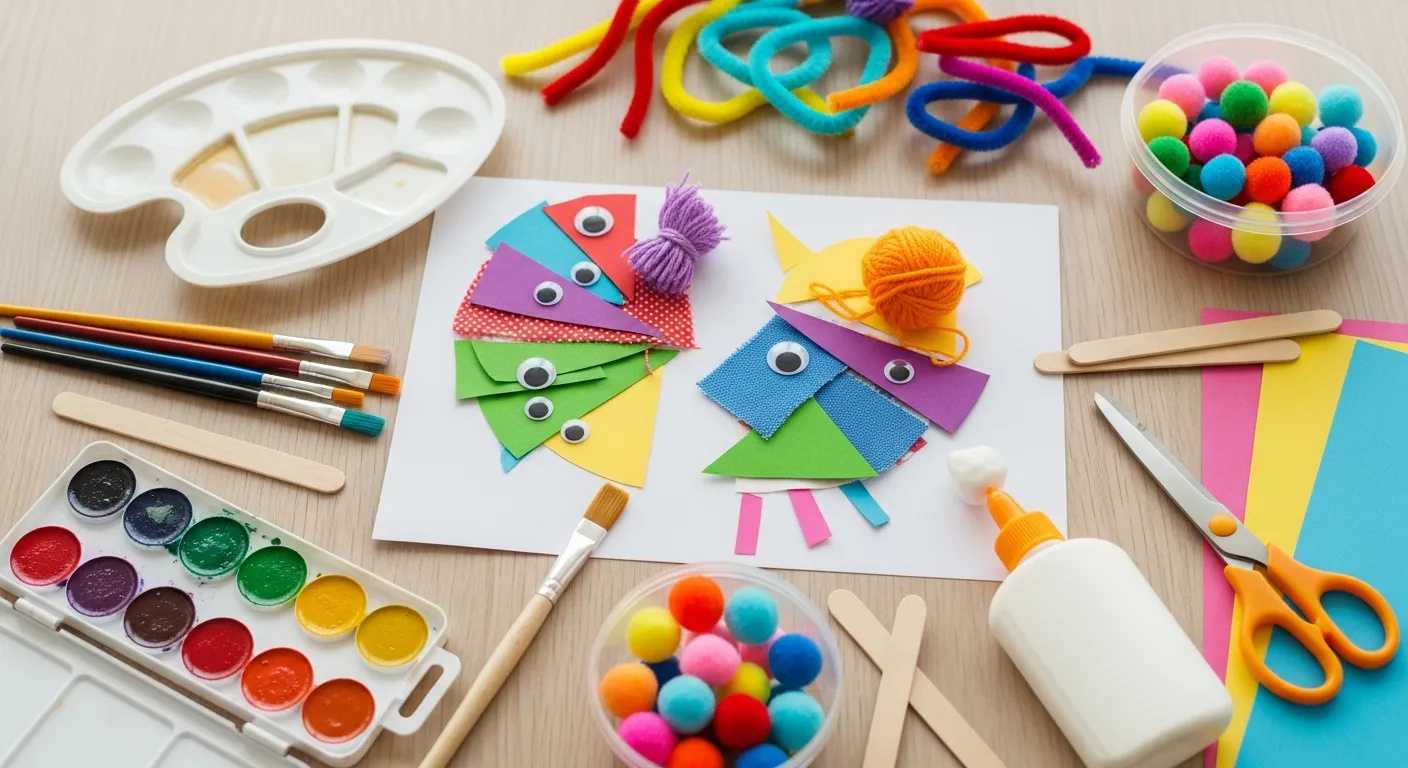
The Best Art & Crafts Supplies for Unleashing Your Creativity
The world of art and crafts is as vast and varied as the human imagination. From the delicate strokes of a watercolor brush to the bold textures of mixed media, there's an endless array of mediums and materials waiting to be explored. Whether you're a seasoned artist seeking to expand your toolkit, a beginner embarking on your creative journey, or someone looking for a mindful and rewarding hobby, choosing the right supplies can make all the difference. This guide delves into the best art and crafts supplies across various categories, helping you select the tools that will best bring your visions to life.Painting: Bringing Color to Canvas and Beyond
Painting is a cornerstone of the art world, offering a direct and expressive way to translate emotion and observation into tangible form. The type of paint you choose will significantly influence your technique, the desired finish, and the surfaces you can work on.Oils: The Timeless Classic
Oil paints are renowned for their rich, luminous colors, slow drying time, and exceptional blending capabilities. This makes them ideal for achieving subtle gradations, soft edges, and detailed work. The slow drying time also allows artists to rework areas extensively, making them forgiving for beginners and masters alike. Traditional oil painting often involves the use of solvents like turpentine or mineral spirits for thinning and cleaning brushes, though modern water-mixable oils offer a similar experience with easier cleanup.
- Pigment Quality: Look for artist-grade oils with high pigment concentration for vibrant, lightfast colors that won't fade over time.
- Binder: Linseed oil is the most common binder, offering excellent durability and flexibility.
- Surface Compatibility: Oils adhere well to primed canvas, wood panels, and heavy paper.
Acrylics: Versatile and Vibrant
Acrylic paints are water-based, fast-drying, and incredibly versatile. They can be used straight from the tube for opaque, bold applications, or thinned with water or mediums to create watercolor-like washes. Their quick drying time is a double-edged sword: it allows for rapid layering and overpainting, but can be challenging for beginners who prefer more time to blend. Acrylics are also durable and flexible once dry, making them suitable for a wide range of surfaces.
- Mediums: Explore acrylic mediums such as gloss, matte, gel, and flow improvers to alter the paint's consistency, texture, and drying time.
- Surface Versatility: Acrylics adhere to canvas, paper, wood, fabric, and even some plastics.
- Color Range: The market offers an extensive spectrum of acrylic colors, from standard hues to iridescent and metallic finishes.
Watercolors: Delicate and Expressive Washes
Watercolors are known for their transparency, luminosity, and portability. They are activated with water, allowing for delicate washes, subtle layering, and vibrant glazes. The control of water is key to mastering watercolors, offering a unique challenge and rewarding results. They are typically used on specialized watercolor paper, which can withstand the moisture without buckling.
- Form: Available in pans (solid cakes) and tubes (concentrated paste), both offering excellent color quality.
- Paper Quality: Cold-press watercolor paper is the most common, offering a textured surface that holds paint well. Hot-press paper is smoother, ideal for fine detail.
- Brush Types: Natural hair brushes (like sable) are preferred for their ability to hold water and create fine points, though synthetic alternatives are also excellent.
Drawing: The Foundation of Visual Art
Drawing is often the first step in the creative process, whether it's a quick sketch or a detailed illustration. The right drawing tools can significantly impact the quality and expressiveness of your work.Pencils: From Sketch to Shading
Graphite pencils are the most fundamental drawing tool. They come in a range of hardnesses, denoted by numbers and letters. The 'H' scale (e.g., 2H, 4H) indicates harder lead, producing lighter lines suitable for sketching and fine detail. The 'B' scale (e.g., 2B, 6B) indicates softer lead, producing darker lines ideal for shading and bold strokes. A good set of pencils should include a range from hard to soft.
- Hardness Scale: A balanced set might include HB, 2H, 4H for lighter work, and 2B, 4B, 6B for darker tones.
- Erasers: Kneaded erasers are pliable and can be shaped to lift graphite subtly, while rubber or vinyl erasers offer more aggressive removal.
Charcoal: Bold Strokes and Deep Blacks
Charcoal offers rich, velvety blacks and is excellent for expressive mark-making and dramatic tonal contrasts. It's available in compressed form (sticks or pencils) for more control and vine charcoal (thinner, more easily blended) for softer effects. Charcoal can be messy but offers unparalleled depth and a unique textural quality.
- Types: Compressed charcoal provides consistent dark tones, while vine charcoal is softer and blends more easily.
- Fixatives: A fixative spray is often used to prevent smudging once the drawing is complete.
Pastels: Vibrant Color in Stick Form
Pastels, both oil and soft, offer a direct application of color. Soft pastels are powdery and blendable, allowing for painterly effects and subtle transitions. Oil pastels are wax-based, offering more opaque and vibrant marks with less dust. Both are applied directly to the surface, providing an immediate and tactile experience.
- Soft Pastels: Available in a vast array of colors, they are highly blendable with fingers, brushes, or blending tools.
- Oil Pastels: Offer a creamy texture and can be layered and blended, though they don't have the same powdery finish as soft pastels.
- Paper Choice: Textured paper, such as pastel paper or sanded paper, is ideal for gripping the pastel particles.
Sculpture & 3D Crafts: Building and Shaping
Bringing creations into the third dimension opens up a whole new realm of artistic expression. From malleable clays to sturdy building materials, the options are abundant.Clay: From Earthy to Synthetic
Clay is a versatile medium for sculpting. Air-dry clay hardens on its own and is great for beginners and decorative pieces. Polymer clay, when baked, becomes durable and can be used for intricate jewelry, miniatures, and figures. Ceramic clay requires firing in a kiln but offers the most traditional and robust sculptural results.
- Air-Dry Clay: Easy to use, no firing needed, but can be brittle once dry.
- Polymer Clay: Requires baking to cure, allowing for detailed work and vibrant colors.
- Sculpting Tools: A set of wooden or metal tools is essential for shaping, carving, and adding detail.
Modeling Materials: Playful and Accessible
Beyond traditional clay, a variety of modeling materials cater to different needs. Modeling compound, often oil-based, remains pliable indefinitely and is excellent for practicing techniques or creating temporary models. Foam clay is lightweight and air-dries to a soft, rubbery texture, perfect for crafting figures and embellishments.
- Modeling Compound: Remains soft and is ideal for practice and repeated use.
- Foam Clay: Lightweight and self-hardening, creating a unique, textured finish.
Paper Crafts: Precision and Intricacy
Paper is a remarkably versatile medium, capable of being folded, cut, glued, and manipulated into countless forms.Cardstock and Specialty Papers: The Building Blocks
For any paper craft project, the quality of the paper is paramount. Cardstock offers a sturdy base for cards, invitations, and scrapbooking layouts. Specialty papers, such as patterned papers, metallic foils, vellum, and textured papers, add visual interest and unique tactile qualities to your creations.
- Weight: Cardstock typically ranges from 65 lb to 110 lb cover weight, providing varying degrees of rigidity.
- Acid-Free: Essential for scrapbooking and archival projects to prevent yellowing and degradation over time.
Cutting Tools: Precision is Key
Accurate cutting is crucial for clean and professional-looking paper crafts. Craft knives, precision scissors, and cutting mats are indispensable. For more intricate designs, a die-cutting machine and dies offer effortless and repeatable cuts. A paper trimmer provides straight, clean edges for larger pieces.
- Craft Knives: Ideal for detailed cuts and intricate shapes.
- Paper Trimmers: For quick, straight cuts on larger sheets of paper.
- Die-Cutting Machines: For precise and intricate shapes using metal dies.
Adhesives: The Binding Force
The right adhesive ensures your paper creations hold together securely and aesthetically. Craft glues, double-sided tape, adhesive runners, and foam dots offer different strengths and finishes. For 3D projects, strong liquid glues or hot glue guns can be invaluable.
- Liquid Glues: Offer strong bonds and can be repositioned to some extent before drying.
- Double-Sided Tape: Provides a clean, instant bond, ideal for layering and cardmaking.
- Foam Dots/Adhesive Squares: Add dimension and lift to projects.
Mixed Media: The Art of Combination
Mixed media art embraces the freedom to combine various materials and techniques, breaking down traditional boundaries.Collage Elements: Textures and Imagery
Collage involves adhering different materials, such as paper scraps, fabric, photographs, and found objects, onto a surface. This allows for rich textural depth and the creation of new narratives from existing imagery.
- Found Objects: Old magazines, newspapers, fabric scraps, buttons, and even natural elements can be incorporated.
- Adhesives: Mod Podge is a popular choice for collaging, acting as both glue and sealant.
Mark-Making Tools: Beyond the Brush
Mixed media artists often employ a wide array of tools for applying color and texture. This can include markers, ink pens, stencils, stamps, spray paints, and even unconventional items like credit cards for scraping paint.
- Stencils: For creating repeating patterns and defined shapes.
- Ink Pens: Available in various tip sizes and colors for detailed drawing and outlining.
- Spray Paints: Offer broad coverage and can be used for backgrounds or creating atmospheric effects.
Essential Tools for Every Artist
Regardless of your chosen medium, certain tools are fundamental to any art and crafts practice.Quality Brushes and Applicators
The right brush can dramatically influence your mark-making. For painting, consider synthetic brushes for acrylics and watercolors, and natural hair brushes for oils. For drawing and mixed media, fine-tipped pens, markers, and blending tools are essential.
- Brush Shapes: Flat brushes are good for broad strokes, round brushes for detail, and filbert brushes offer a versatile blend.
- Pen Types: Fine liners, brush pens, and calligraphy pens offer diverse line weights and effects.
Cutting Tools and Surfaces
A good pair of scissors, a craft knife, and a self-healing cutting mat are indispensable for precise work across many disciplines. These tools protect your work surface and ensure clean, accurate cuts.
Storage and Organization
Keeping your supplies organized is crucial for efficient workflow and preserving your materials. Invest in quality storage solutions such as art bins, pencil cases, brush holders, and drawer organizers. This will not only keep your workspace tidy but also help you easily locate the supplies you need.
Choosing the best art and crafts supplies is a personal journey. Experimentation is key, and what works for one artist may not be ideal for another. The most important thing is to select tools that inspire you, encourage exploration, and help you translate your creative ideas into reality. Happy creating!