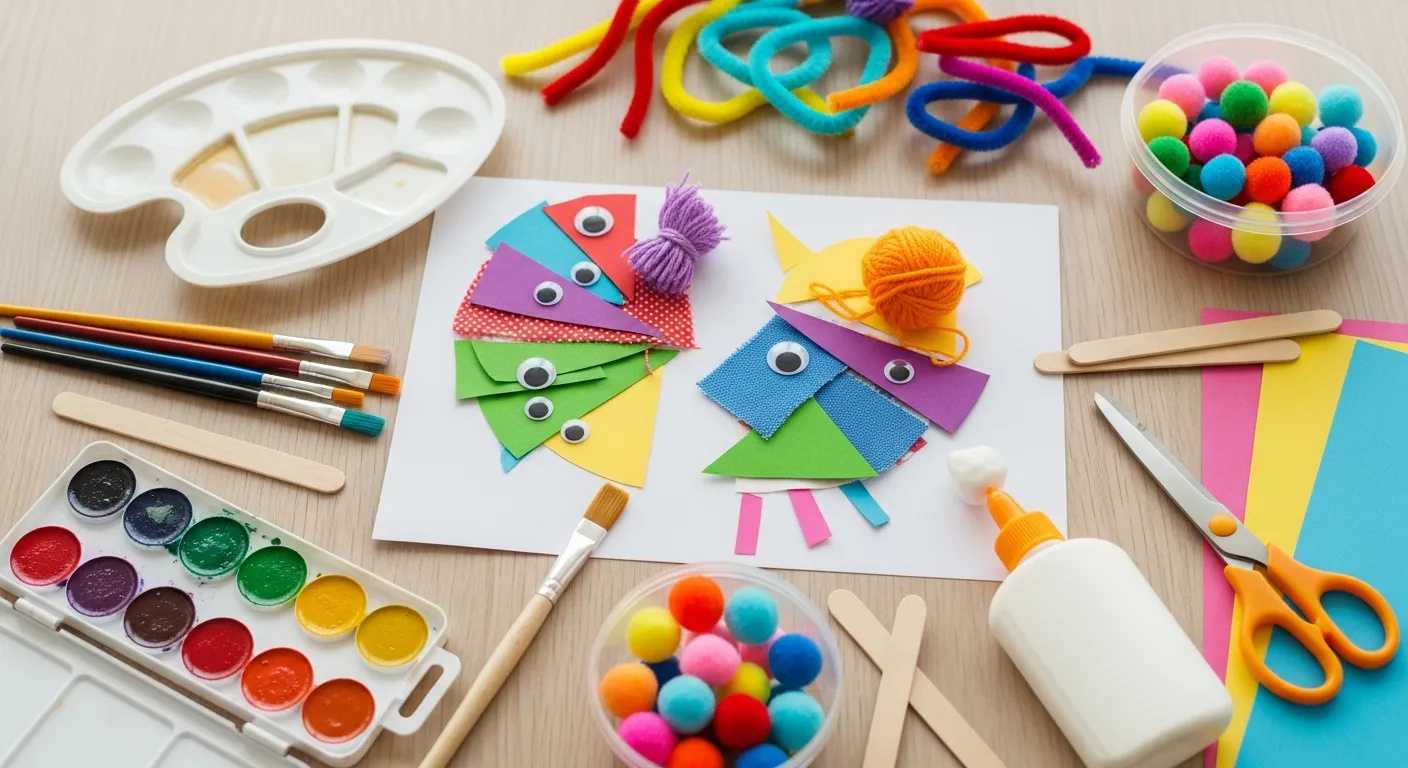
The Ultimate Buying Guide for Art & Crafts Enthusiasts
Embarking on a creative journey, whether you're a seasoned artist or a curious beginner, is a deeply rewarding experience. The world of art and crafts offers an endless canvas for self-expression, skill development, and the sheer joy of making. However, navigating the vast landscape of supplies can feel overwhelming. This comprehensive buying guide is designed to equip you with the knowledge and confidence to select the right tools and materials for your artistic endeavors. From foundational sketching supplies to specialized mediums and crafting essentials, we'll explore what to look for, why it matters, and how to make informed choices that will fuel your creativity.
Understanding Your Creative Goals
Before diving into specific product categories, it's crucial to define your artistic aspirations. What kind of art do you want to create? What crafts are you drawn to? Your answers will significantly influence the types of supplies you need.
Identifying Your Preferred Mediums
- Drawing & Sketching: Do you enjoy the precision of lines, the subtlety of shading, or the expressive nature of charcoal?
- Painting: Are you drawn to the vibrant opacity of acrylics, the luminous transparency of watercolors, the rich depth of oils, or the unique textures of gouache?
- Sculpture & 3D Art: Do you envision working with clay, wire, paper mache, or found objects?
- Printmaking: Are you interested in techniques like linocut, screen printing, or monoprinting?
- Collage & Mixed Media: Do you like combining different materials, textures, and images?
- Crafting: This is a broad category encompassing everything from knitting and crochet to jewelry making, paper crafts, candle making, soap making, and more. Consider what tangible items you wish to create.
Considering Your Skill Level
Your experience level will also play a role in your purchasing decisions. Beginners may benefit from starter kits and more forgiving materials, while advanced artists might seek out professional-grade supplies for greater control and nuance.
- Beginner: Focus on affordable, versatile materials that allow for experimentation without a significant financial investment.
- Intermediate: As you refine your techniques, you might start investing in higher-quality pigments, brushes, or tools that offer better performance.
- Advanced/Professional: You'll likely have a clearer understanding of your specific needs and will prioritize premium materials for optimal results.
Essential Art Supplies: A Deep Dive
Let's break down the core supplies that form the backbone of many artistic practices.
Drawing & Sketching Supplies
The foundation of many visual arts, good drawing tools are indispensable.
Pencils
- Graphite Pencils: These are graded on a scale from 'H' (hard, for light lines) to 'B' (black, for dark tones). A good starter set might include HB, 2B, and 4B for a range of values. For more advanced work, consider a wider range including 6H, H, HB, B, 2B, 4B, 6B, and 8B.
- Colored Pencils: Available in wax-based (creamy, blendable) and oil-based (harder, more precise) varieties. Look for lightfast pigments for longevity. Brands like Prismacolor and Faber-Castell are highly regarded.
- Charcoal Pencils & Sticks: Offer deep blacks and are excellent for expressive shading. Vine charcoal is softer and easier to blend, while compressed charcoal is denser and darker.
- White Charcoal/Pastel Pencils: Ideal for highlighting on dark paper.
Paper
- Sketchbooks: Look for paper weight (gsm) and texture. For dry media like pencils and charcoal, 90-120gsm is usually sufficient. Smoother paper is better for fine detail, while toothy paper grips charcoal and pastel well.
- Drawing Paper: Available in various weights and textures, suitable for a range of dry media.
- Bristol Board: A smooth, heavy paper ideal for pen and ink or detailed pencil work.
Erasers
- Kneaded Erasers: Pliable and can be shaped to lift graphite or charcoal gently without damaging the paper.
- Plastic/Rubber Erasers: More abrasive, good for completely removing pencil marks.
- Eraser Pencils: Offer precision for small areas.
Other Drawing Tools
- Pens: Fineliners (for consistent lines), brush pens (for variable line width), gel pens, and dip pens with ink.
- Blending Tools: Tortillons (rolled paper stumps) and blending stumps are essential for smudging and creating smooth tonal transitions.
- Sharpeners: A good quality pencil sharpener is a must. Consider a manual one for portability and an electric one for efficiency.
Painting Supplies
Painting offers a vibrant world of color and texture. The choice of medium dictates many of your supply needs.
Paints
- Acrylic Paints: Water-soluble, fast-drying, and versatile. Available in student grades (more binder, less pigment) and artist grades (higher pigment load, richer color, better lightfastness).
- Watercolors: Transparent and luminous, requiring water for dilution. Available in tubes (more pigment) and pans (convenient for travel).
- Oils: Rich, slow-drying, and offer exceptional blending capabilities. Require solvents for cleanup.
- Gouache: Opaque watercolors that dry to a matte finish. Can be reactivated with water.
Brushes
- Bristle Type: Natural bristles (hog hair, sable) are traditional, while synthetic bristles are more durable and versatile, suitable for acrylics and watercolors.
- Brush Shapes: Round (for detail, lines), flat (for broad strokes, washes), filbert (a rounded flat, good for blending), fan (for textures, blending), and detail brushes.
- Quality: Invest in a few good quality brushes rather than many cheap ones. Look for brushes that hold their shape and don't shed bristles.
Surfaces
- Canvases: Stretched canvases (cotton or linen) are common. Consider the weight of the canvas and the priming (gesso).
- Canvas Boards: Lighter and more affordable than stretched canvases.
- Paper: Watercolor paper (heavyweight, textured), acrylic paper, and oil paper are specifically designed for these mediums.
- Wood Panels: Offer a rigid, smooth surface.
Other Painting Essentials
- Palette: For mixing paints. Options include wooden palettes, plastic palettes, ceramic tiles, or even disposable paper palettes.
- Mediums & Varnishes: Acrylic mediums can alter drying time, finish, and texture. Varnishes protect finished paintings and can unify the sheen.
- Solvents & Cleaners: For oil paints (turpentine, mineral spirits) and general cleaning.
- Water Containers: For rinsing brushes.
Sculpture & 3D Art Supplies
Bringing your creations into the third dimension opens up a new realm of tactile art.
Modeling Materials
- Clay:
- Air-Dry Clay: Dries hard without firing, good for beginners and simpler projects.
- Polymer Clay: Cures in a home oven, offering durability and a wide range of colors.
- Ceramic Clay (Earthenware, Stoneware, Porcelain): Requires firing in a kiln.
- Papier-Mâché: Uses paper strips and paste to create lightweight forms.
- Wire: For armatures, armatures, and intricate details. Aluminum and copper wire are popular.
- Sculpting Foam: Lightweight and easy to carve.
Tools
- Sculpting Tools: For shaping, smoothing, and adding detail to clay and other materials. This includes loop tools, ribbon tools, needle tools, and spatulas.
- Carving Tools: For wood or foam.
- Wire Cutters & Pliers: Essential for working with wire.
- Rolling Pins: For flattening clay or papier-mâché.
Armatures & Bases
- Wire Mesh: For building up larger forms.
- Cardboard & Foam Core: For structural support.
- Wooden Bases: For displaying finished sculptures.
Crafting Supplies: A World of Possibilities
The term "crafts" is incredibly broad, so let's touch upon some popular areas.
Paper Crafts
- Cardstock & Specialty Papers: For scrapbooking, card making, and origami.
- Cutting Tools: Scissors, craft knives, rotary cutters, paper trimmers.
- Adhesives: Glue sticks, liquid glue, double-sided tape, foam dots.
- Stamps & Ink Pads: For decorative elements.
- Embellishments: Stickers, glitter, ribbon, brads.
Textile Crafts (Knitting, Crochet, Sewing)
- Yarn: Available in various fibers (wool, cotton, acrylic) and weights.
- Knitting Needles & Crochet Hooks: Made from bamboo, wood, metal, or plastic, in a range of sizes.
- Fabric: For sewing projects.
- Sewing Machine & Accessories: Needles, thread, scissors, pins.
Jewelry Making
- Beads: Glass, metal, wood, stone, seed beads.
- Findings: Clasps, ear wires, jump rings, crimp beads.
- Wire: Craft wire, beading wire.
- Pliers: Round-nose, chain-nose, flat-nose pliers are essential.
Other Crafts
- Candle Making: Wax, wicks, fragrance oils, dyes, containers.
- Soap Making: Soap bases, lye (for cold process), molds, additives.
- Resin Art: Epoxy resin, molds, pigments, safety equipment.
Choosing Quality and Value
When purchasing art and craft supplies, consider the following:
- Brand Reputation: Established brands often have a track record of quality and consistency.
- Material Quality: For paints, look for pigment load and lightfastness. For paper, consider weight and acidity. For brushes, check bristle retention and shape.
- Intended Use: Are you looking for student-grade for practice or professional-grade for finished pieces?
- Durability: Will the tools and materials withstand repeated use?
- Safety: Especially important for children's art supplies or when working with chemicals like solvents or resins. Ensure proper ventilation and protective gear.
Organizing Your Creative Space
As your collection of supplies grows, so does the need for effective organization. Investing in storage solutions will not only keep your workspace tidy but also make your materials easily accessible, saving you time and frustration.
- Storage Bins & Boxes: For paints, brushes, tools, and smaller items.
- Shelving Units: To store larger items like canvases and paper pads.
- Drawer Organizers: For pencils, pens, and small crafting components.
- Tool Rolls & Cases: For brushes and sculpting tools.
- Labeling: Clearly label containers to quickly find what you need.
Conclusion
The world of art and crafts is an exciting and ever-evolving domain. By understanding your creative goals, familiarizing yourself with different materials, and making informed purchasing decisions, you can build a well-equipped studio that supports your artistic journey. Don't be afraid to experiment, try new things, and invest in quality tools that will serve you well for years to come. Happy creating!